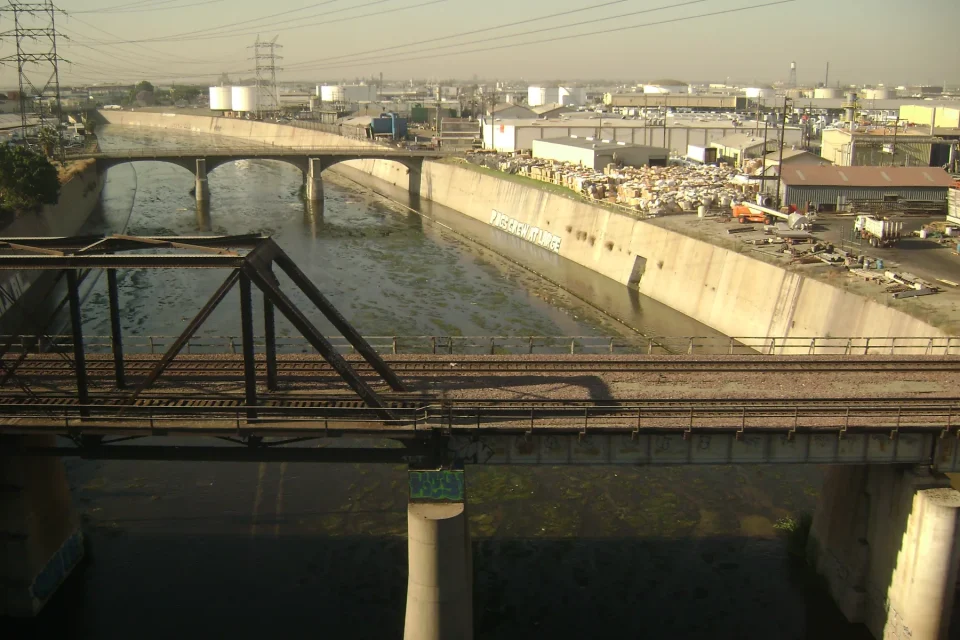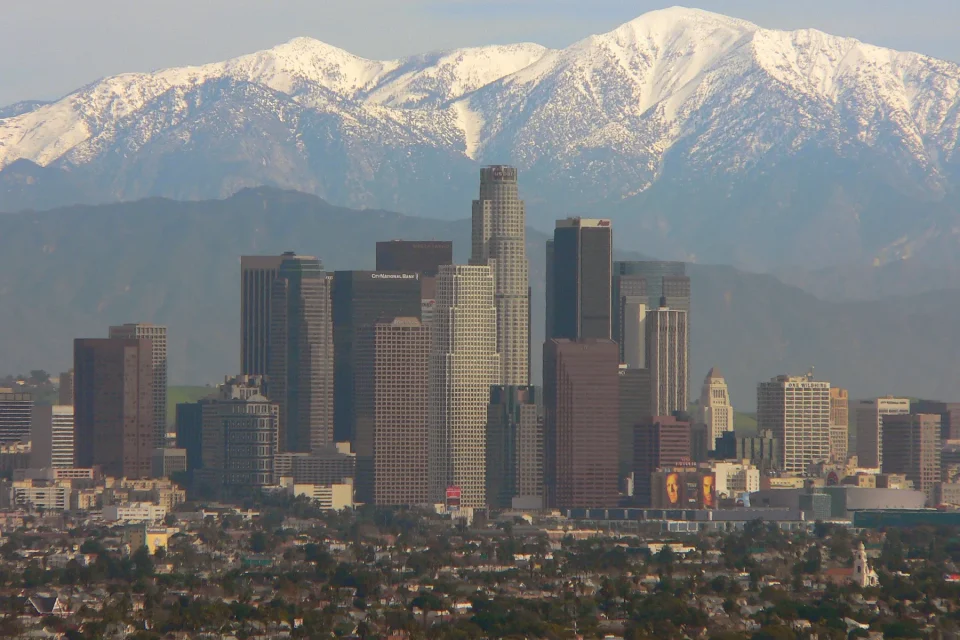
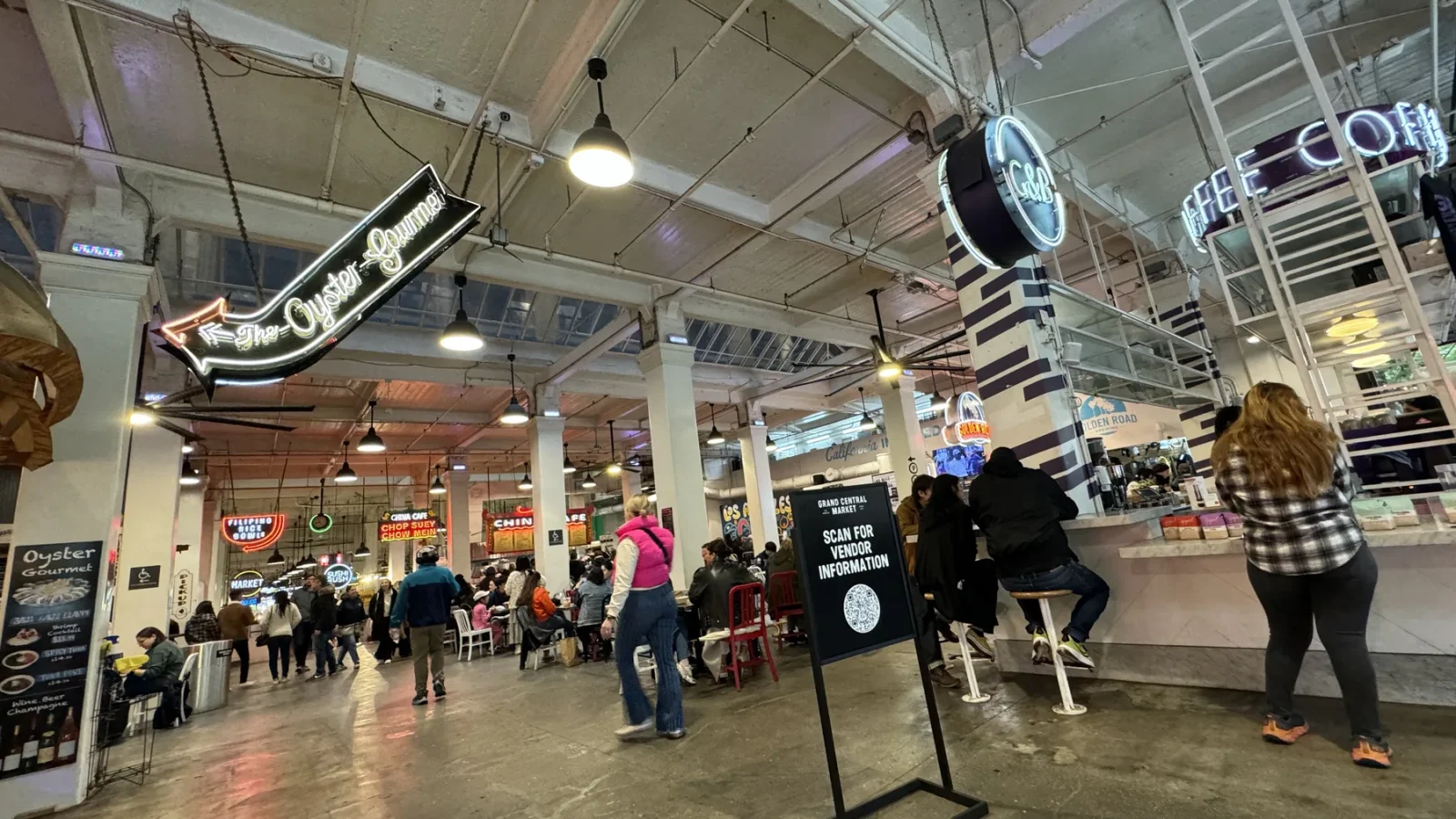
Downtown Los Angeles rewards a route built from thresholds. Union Station creates a formal arrival; nearby public spaces open the scale; civic buildings change the street wall; Broadway layers historic theater façades and active commerce; Grand Central Market compresses movement and food into one bright interior. The interest lies in the transitions, not in racing to photograph each name.
Begin by checking current Metro service and the official hours for any institution you intend to enter. A historic building visible from the sidewalk may not have public interior access. Event security, construction, and street closures can change a walking line. Keep one destination essential and let the rest be adjustable.

Full-Day Iconic Sights of LA, Hollywood, Beverly Hills, Beaches and More
This 7.5 hour guided tour - by LA-natives - is perfect for families, couples and all ages! Our routes are carefully curated to visit the most welcomin...

Warner Bros. Studio Tour Hollywood
Our Studio Tour brings you closer than ever to the entertainment you love. You’ll explore one of the busiest worki...
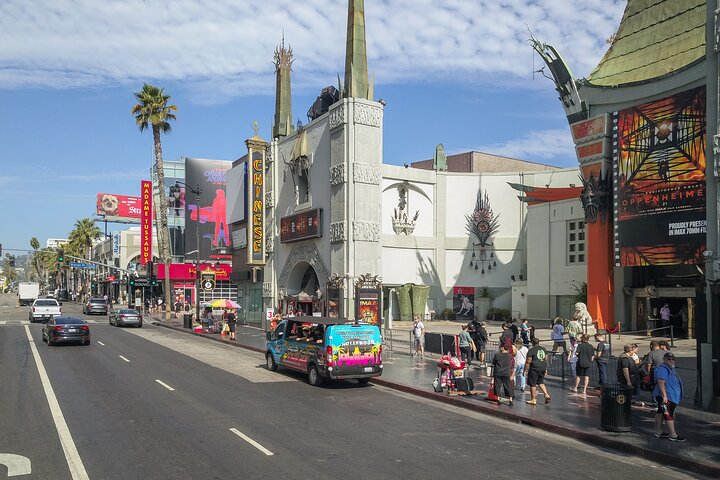
Hollywood, Beverly Hills & Celebrity Homes Tour by Open Air Bus
Your Ticket to The Hollywood Hills on this Interactive Sightseeing Tour on an Open Air Bus with a Fun Driver Guide...

Best of Los Angeles Guided City Tour with 4 Stops and Free Time
Check out the BEST Los Angeles has to offer on this half-day interactive sightseeing experience! Take a seat on one...
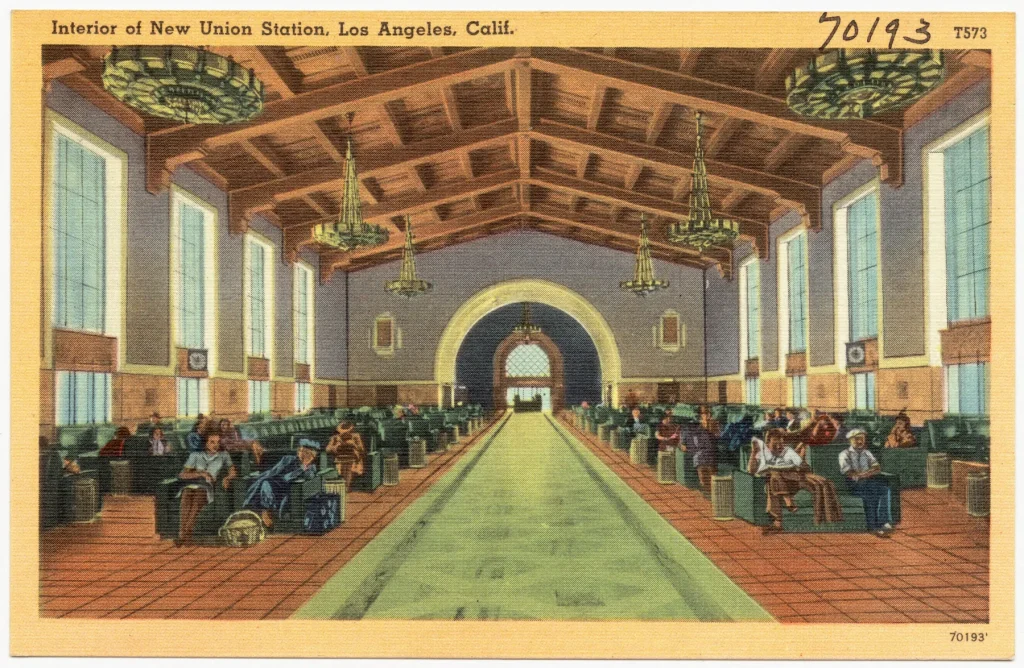
Start with arrival
Pause inside the station only where public access permits. Look at the relationship between the waiting room, ticketing and circulation spaces, courtyards, platforms, and city beyond. The building is not a frozen period set; it remains transportation infrastructure.
From there, choose a civic and cultural route based on what is currently open. Do not assume the shortest line on a map is the most comfortable walk. Crossing design, grade, shade, construction, and the needs of your group matter. If a venue has an accessible entrance on a different side, plan for that entrance from the beginning.
Let Broadway change the scale
Broadway can be read through façades, signs, upper stories, storefronts, and the relationship between historic fabric and contemporary business. Use the Los Angeles Conservancy and City Planning resources when you want reliable architectural context. Avoid calling a building “abandoned” or assigning a style from appearance alone.
Grand Central Market works well as a pause, but it is a working market. Check its current information, keep circulation clear, and treat vendors and customers as people rather than props. Prices, hours, and menus belong to the businesses themselves.
Keep the day downtown
If a museum, theater, or market plan changes, choose another downtown room rather than abandoning the district for a remote landmark. The value of the route is cumulative: arrival, civic scale, historic street, market, and contemporary cultural space. A single meal or performance can become the anchor if it has a fixed time.

Los Angeles 3-Hour City Tour with 3 Stops
Experience Los Angeles on a personalized sightseeing tour unlike the typical scripted experience. Your knowledgeable local guide will share fascinatin...

Small-Group City Tour of Los Angeles, Hollywood and Beverly Hills
Discover the best of Los Angeles, Hollywood, & Beverly Hills on this immersive multimedia sightseeing tour—perfect...

Los Angeles Hollywood Sign Hike: Front, Behind, and Expert Guide
Featured by the New York Times, The Today Show, USA Today, and the LA Times — Bikes and Hikes LA is LA's most trus...

Catalina Island Private Guided Golf Cart Tour of Avalon
Catalina Island’s original custom guided golf cart tour! Explore Avalon through the eyes of a local. With us you w...
Finish with a return plan you have already checked. Downtown after an event may move differently than it did at midday. Confirm the correct station entrance, final service, pickup point, or parking access before you need it.